
Shared screens are everywhere now. In meeting rooms. Classrooms. Hallways. Lobbies. They carry the weight of collaboration, communication, and connection. Yet the technology behind them often feels scattered, inconsistent — and much harder than it needs to be.
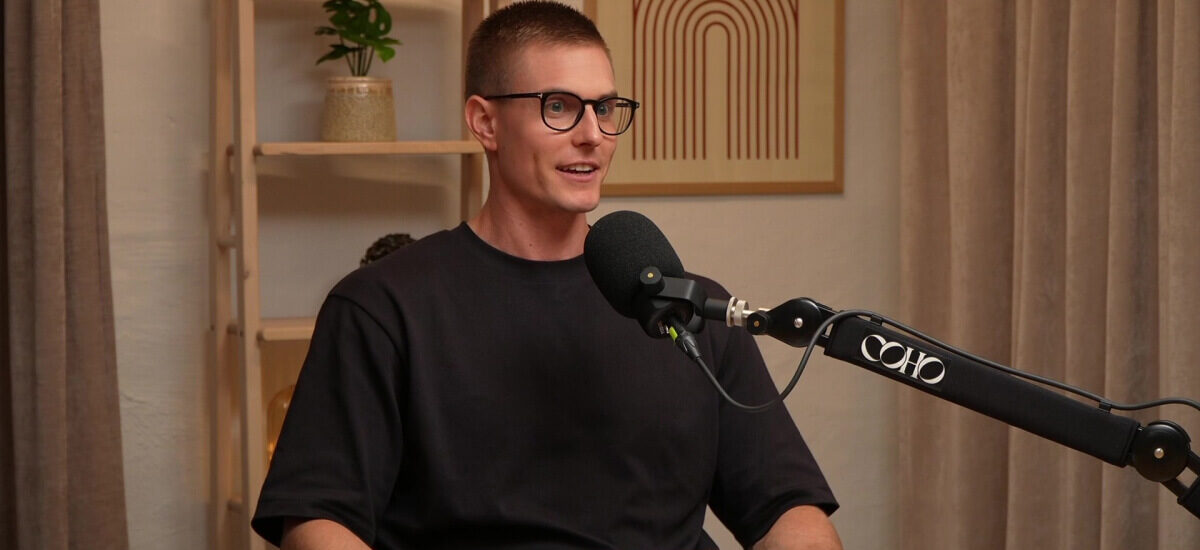
We sat down with Jonas Gyalokay, co-founder of Airtame, to talk about how the industry got here, what needs to change, and why unifying the experience across screens might be one of the most overlooked opportunities in modern workplaces and schools.
Jonas: In some ways, everything has changed. Wi-Fi standards evolved, BYOD (Bring Your Own Device) became the norm, hybrid work reshaped the expectations for meeting rooms. Schools put more technology into classrooms. Screens became the center of so many workflows.
But in other ways, nothing has changed at all. The industry is still super fragmented. A lot of rooms still rely on cables, adapters, or legacy devices. Even large enterprises run completely different systems in rooms that sit right next to each other. Or they exclude visitors from joining with their own devices. People still waste time figuring out how to present or start a call.
It’s a bit ironic. We have more screens than ever, yet they don’t work together in any cohesive way. That gap is what keeps us motivated.
Jonas: It means two things. First, very literally, it’s about enabling people to walk into a room and get their content onto the screen without friction. The screen should serve them, not the other way around.
Second, it’s philosophical. Screens are tools. People are the purpose. A school doesn’t invest in technology because the screen is interesting. They do it because students need to focus, collaborate, and learn. The same goes for workplaces. If the tech slows you down, it’s not doing its job.
When we design Airtame, we always start with the person walking into the room. What are they trying to accomplish? What typically gets in their way? That is always the starting point for us.
Jonas: In the early days we learned a lot the hard way. It took years to build a wireless technology that works across every network condition and on every device type — and that works every time.
Today, we hear a very different story. People tell us they cut hours of work each week because they no longer troubleshoot meeting rooms. IT teams tell us their ticket volume drops. Teachers tell us they can finally start class on time.
The turning point was treating reliability as a product in itself. Not a feature within the device, or an add-on nice-to-have. But a core requirement. When something in a shared space “just works,” people stop thinking about the technology. That is the highest compliment I can think of.
Jonas: Because nobody ever defined the category. We have clear categories for “video conferencing software” or “digital signage CMS” or “wireless presentation tools.” But no category for the thing most organizations actually need: a unified platform for shared screens.
Right now, customers stitch together solutions. So they have one device for presenting. Another thing for signage. Another for video sessions. Sometimes another for alerts, if they need that. It’s messy, very expensive, and more importantly inconsistent.
Airtame doesn’t fit neatly into one of those old categories because we do all of it. We focus on what people actually do in rooms rather than what the industry historically called each product type. Over time, I think this will become its own category. It should. Workplaces and the people in them need it.
Jonas: From a business perspective, locking into a single ecosystem is attractive. It gives you control, reduced maintenance, and often a clear audience. But it’s also exclusive. And it increases fragmentation.
Many offices today don’t run on one type of device only. Schools certainly don’t. People bring what they have. If you design for only one OS or hardware path, you make it easy for a few — at the expense of many. You’re also making IT’s life significantly harder.
Openness is not the easiest route. But it is the right one. The world will not become less diverse in terms of devices and preferences. Unifying the experience across them is a more important challenge than adding to the fragmentation.
Jonas: I think we’re entering a phase where screens stop being “endpoints” and start becoming part of a larger, ambient layer of information. The hardware will keep improving, sure, but the real transformation will be in the infrastructure that ties everything together. Right now, every workflow lives in its own silo. One tool for presenting. One for signage. One for video calls. One for alerts. The future is a shared layer that connects all of it.
When you walk into a room, the screen should already understand the context. Not in a sci-fi sense, but in a practical one. It should know whether the space is being used for a lesson, a meeting, or a presentation. It should adjust to that mode without anyone having to hunt for the right input or app. I see screens becoming more adaptive, more integrated with their surroundings.
Another shift is virtualization. Not every room will need a physical device. Many screens already have enough built-in compute to run a platform like ours without external hardware. Others will soon. That gives IT more freedom. It also means the intelligence of the room isn’t tied to a box in the corner but to a service that can flex with your environment.
We’ll also see screens playing a bigger role in safety and situational awareness. Alerts, instructions, and real-time communication will move from “nice to have” to “expected.” That requires a unified system. You can’t have one tool for signage and another for critical information.
And then there’s language. Right now we still talk about “digital signage” and “wireless presentation” like it’s 2005. These are outdated categories. People don’t think in those terms anymore. They think: “I need to show something on the screen,” or “this room needs to support any call,” or “we need to keep people informed.” The industry will eventually catch up with that reality. I think there will be a new category — maybe we’ll help define it — that covers everything people actually do with shared screens. Because the way we use screens has outgrown the words we have for them.
Jonas: Screens should support the flow of collaboration with as little friction as possible. That’s my statement.
If you get the underlying platform right, everything else becomes easier. If you don’t, every room will always feel slightly different, slightly confusing, slightly unreliable. And people deserve better than that.
If we can do that at scale and make it feel simple in the process, we’ll have done something meaningful.
Shared screens are no longer passive surfaces. They’re part of how organizations communicate, collaborate, and keep people connected. But the systems behind them have not kept up.
Airtame’s approach — unified, open, and people-first — challenges the assumptions that created the fragmented landscape we see today. And as Jonas reminds us, the category for all of this may not have a name yet, but the need is already here.
If you’re exploring how to bring more clarity and cohesion to the screens you already have, we’d be happy to help.