Behind the screens: What does classroom screen technology actually cost over time?
Education
2min read
Simone Engbo
March 31st, 2026
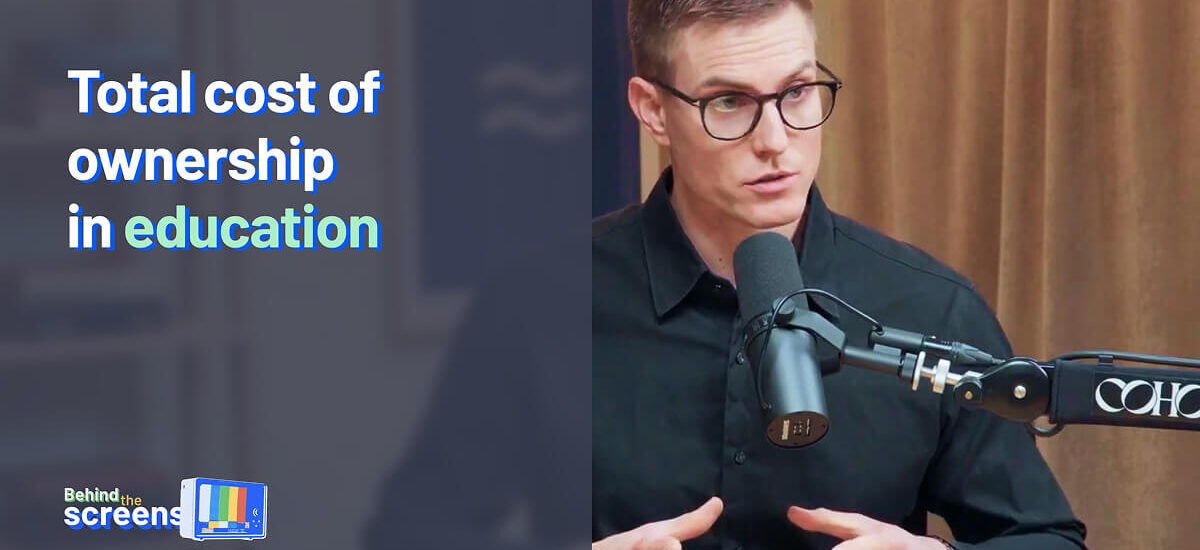
Behind the screens is a new video series where we sit down with people from inside Airtame to work through the questions we hear most from schools and IT teams. For episode one, we asked Jonas Gyalokay, co-founder, to talk through total cost of ownership in education — what classroom screen technology actually costs over time, and where schools tend to get caught out.
The costs schools consistently underestimate
Most purchasing decisions in education start and end with the budget line. A screen, a device, a license — priced, approved, ordered. What that process rarely accounts for is the three to five years that follow.
Training is the one Jonas flagged first. It’s not a one-off. Every product update, every new staff member, every substitute teacher standing in front of a display they’ve never used before — that’s time, and time has a cost. The more complex the solution, the more that number grows.
Installation is rarely just plug-and-play at scale. Deploying across dozens or hundreds of classrooms takes people and hours, and sometimes surfaces infrastructure gaps (Wi-Fi capacity being the most common) that nobody planned for.
Ongoing management doesn’t end at deployment. Support tickets, firmware updates, remote troubleshooting. Or worse, site visits. IT teams absorb this cost quietly, and it adds up over a three- to five-year cycle.
License terms are worth reading carefully. Some vendors disable hardware entirely when a subscription lapses. Others, Airtame among them, retain basic functionality. It’s the kind of detail that rarely comes up during the sales process and matters a lot when the contract is up for renewal.
End-of-life has a cost too, particularly for leased hardware. When the relationship ends, the equipment has to come back. Uninstalling and returning devices across a whole school estate is real operational work.
If any of this sounds familiar, it’s unsurprising — because it’s one of the conversations we constantly see pop up in this space. In the full episode, Jonas goes deeper on what the buying process actually looks like in education; who makes the call, where the frustration usually starts, and what a more transparent vendor conversation could look like.